
TETHER//TAMBATAN IN ARTJOG: ARS LONGA 2026
Make a Longer Table, Not a Higher Wall
When was the last time we truly felt connected to another person?
In an age when we can connect with almost anyone in a matter of seconds, that question feels more immediate than ever. We live in a time when connection is effortless. We exchange messages, like each other's posts, follow one another, share photographs, and even build relationships with people we may never meet in person. Yet amidst all this ease, there are still moments when we long for something more fundamental: to be seen and acknowledged—not simply noticed, but recognised in a way that allows something to pass between us that words alone cannot fully explain.
If we have more ways than ever to connect, why do so many of us still feel alone?
That question became the starting point of TETHER. It led us to the idea of a tether: the invisible ties that keep us connected to something beyond ourselves, whether to another person, a place, a memory, or anything else that helps us remain grounded in a world that never stops moving.
We do not set out to offer definitive answers, nor are we interested in romanticising the analogue past or condemning the digital present. Instead, we have chosen to place this question within a space shaped by clay, paper, ink, metal, moving images, wind, and water, inviting us all to pause, to be present, and to spend a little time with it.
TETHER grows out of the everyday practice of RAD (Ruang Arta Derau), a creative space in Tegallalang, Bali, founded and run by Sekarputi and Agugn. More than a studio, RAD is a small ecosystem where artistic practices and material production come together, gradually learning from one another through collaboration.
Within RAD are several interconnected spaces:
Arta Derau Ceramic, Sekarputi's ceramic studio;
Agugn Printmaking and Paper Studio;
RPFF, a public print studio, independent publishing initiative, and small library founded by Sekarputi and Agugn;
RAD Artspace, a space for exhibitions and artistic dialogue;
RAD Store, a concept store featuring editions and objects by artists, artisans, and designers; and
RADAIR (RAD Artist in Residence), an artist residency programme.
These spaces do not stand alone. They have grown through collaborative practice, shaped by the RAD team alongside the artisans who work together throughout the making process.
On any given day, RAD becomes a meeting place for different forms of material knowledge—from ceramics and printmaking to papermaking and other handcraft traditions. Yet what grows here extends beyond the physical objects themselves. Conversations, laughter, moments of vulnerability, disagreements, and even plans that never come to fruition all become forms of knowledge in their own right. What we are building at RAD, therefore, is not simply a place to work, but a space where conversations can continue to grow.
In other words, RAD is a table that we hope will always be long enough to welcome another person.
But extending the table also means continually asking how that table is built, who helps hold it up, and what kinds of relationships make this space possible. For us, the answers begin with the people behind the work: every artist who devotes months of time, labour, and thought to bringing a work into being; every pair of hands that hangs a piece on the wall; every person who replies to one last message long after they should have been resting.
We see that work, and we honour it.
The discomfort we may feel in asking difficult questions does not diminish its value in the slightest.
RAD is built upon a commitment that is simple, yet deeply sincere: to care for this space with intention. To remain attentive to what enters it, the values it carries, and the people who benefit from its existence.
For us, a safe space is never a passive one. It is a space where questions can still be asked, even when the moment feels uncomfortable. That, too, is an inseparable part of any relationship worth nurturing. Connection is not only about finding agreement; it is also about choosing to remain present when difficult questions begin to emerge.
THE QUESTION AT THE HEART OF IT
We may be living in the most connected moment in human history. Billions of devices exchange information every second. Notifications often arrive faster than our own emotions. We curate ourselves for people we have never met—and perhaps never will. We perform intimacy through comments, story replies, and emojis, hoping they might stand in for things that once came through eye contact, touch, or an embrace.
And yet one thing remains: loneliness.
In Alone Together (2011), sociologist Sherry Turkle observed that technology has made it easier than ever for us to be "together" while, at the same time, feeling increasingly alone. We are constantly available, but not always truly present.
More than a decade later, the Office of the Surgeon General (2023) described loneliness as a public health epidemic. Across different age groups, increased social media use has been accompanied by rising reports of loneliness. In Indonesia, recent studies have also linked intensive social media use among young people with higher risks of stress, anxiety, depression, sleep disturbance, and loneliness (Gunawan et al., 2022).
Still, TETHER does not see this as a failure of technology.
Technology is not the villain of this story. The world is far more complex than a simple contrast between a warm analogue past and a cold digital present. If anything, technology has made it remarkably easy for us to find one another, to exchange ideas, and to stay connected across distances that once felt impossible.
Which brings us back to the same question. If we have more ways than ever to connect, what is it that makes a relationship feel real?
Perhaps the most meaningful connections are not the ones that happen most often, but the ones that leave a trace—connections that stay with us long after the encounter itself has ended.
"The richest connections are not the most frequent ones, but the ones that leave a mark."
— adapted from Brené Brown, Daring Greatly (2012)
RAD AND ITS PRACTICE
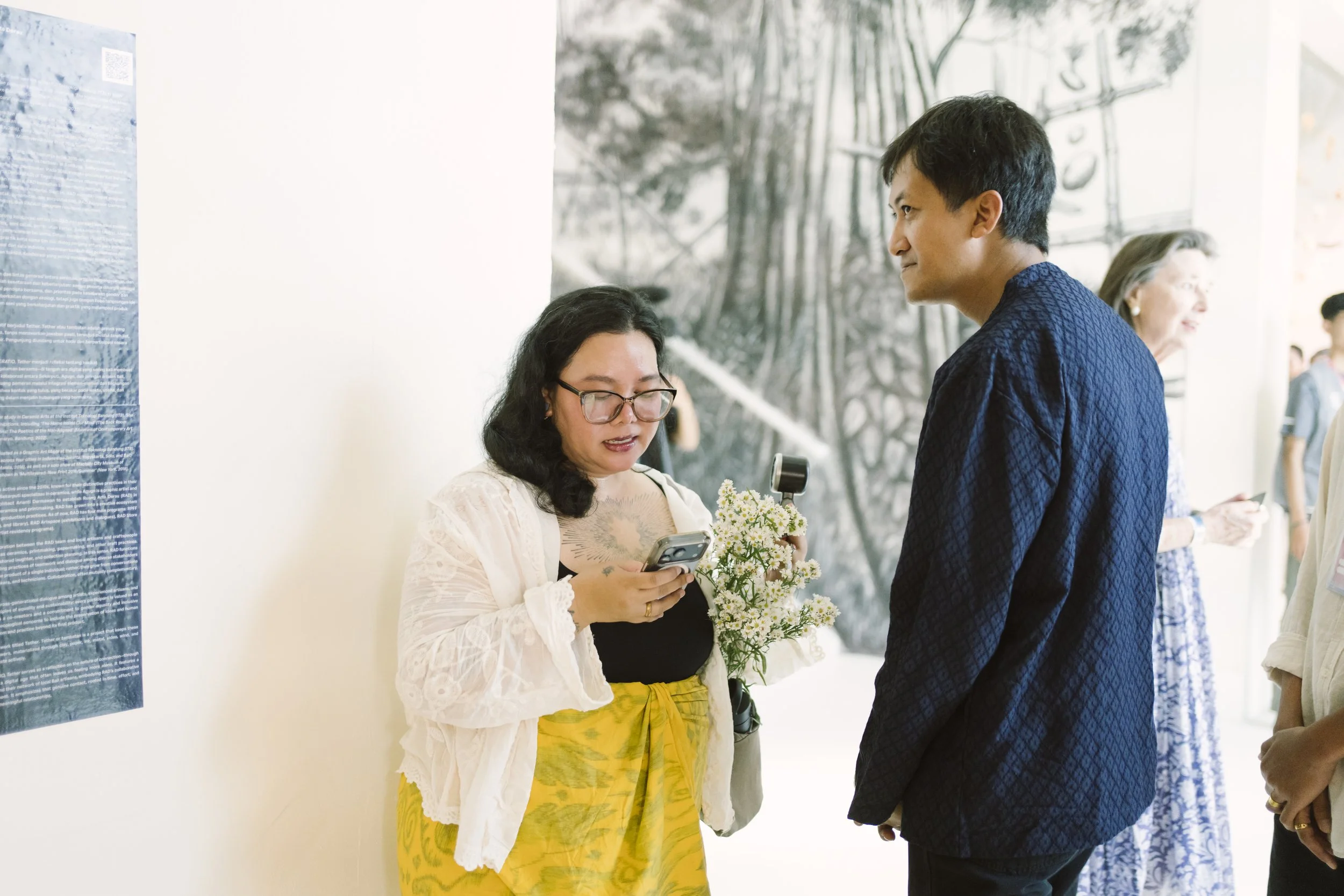
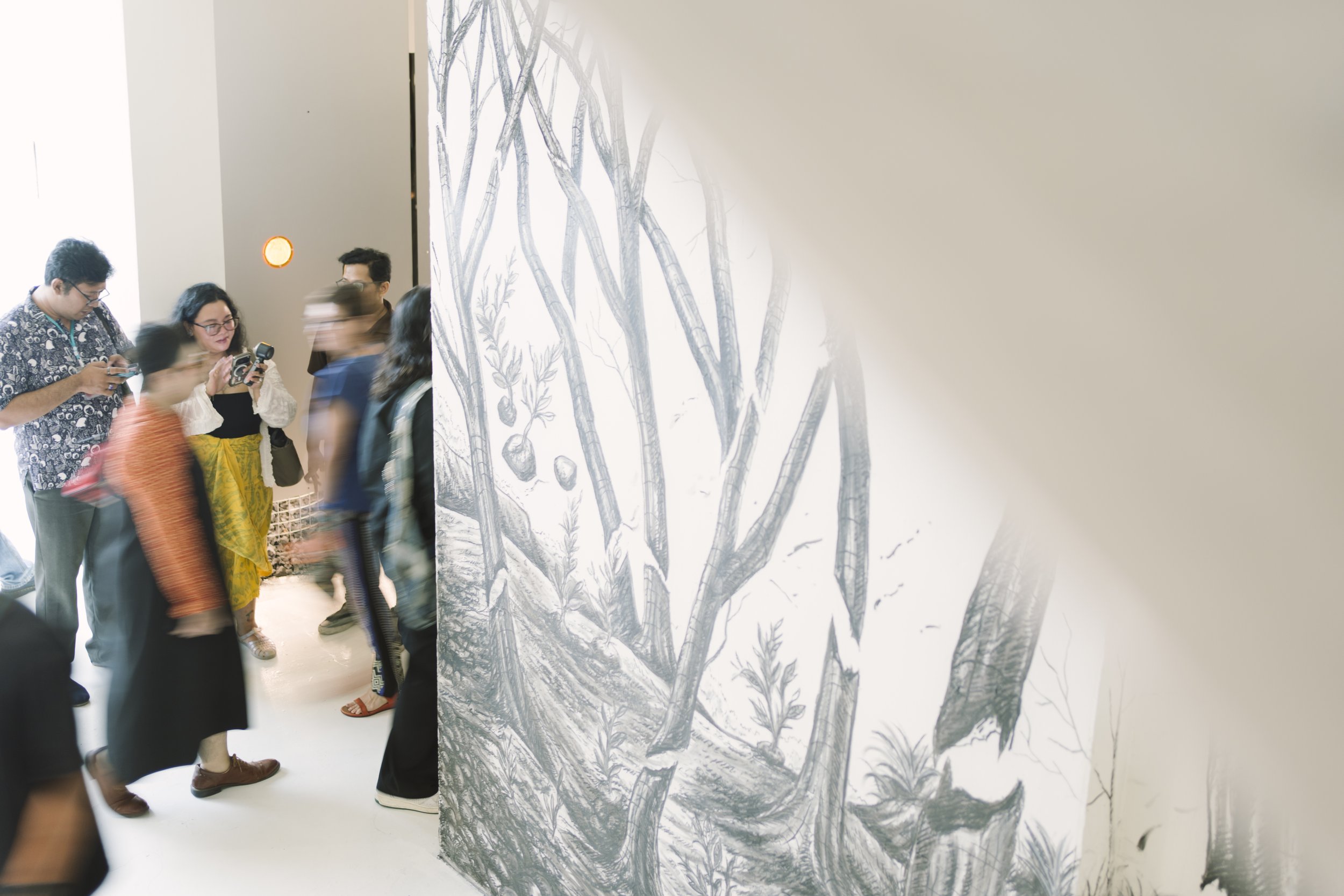
This way of thinking grows out of how we have worked at RAD for years: by making, collaborating, and staying in conversation with everyone involved in the creative process.
In Together (2012), Richard Sennett describes cooperation as our ability to build relationships with people who do not necessarily think, work, or see the world the way we do. It is not a skill that comes from making everyone the same, but from creating room for difference. In many ways, this resonates with what we continue to practise at RAD: extending the table so that more voices, more experiences, and more possibilities for meeting can find a place around it.
At RAD, a work rarely belongs to one individual alone. More often, it grows out of conversations between artists, artisans, fabricators, technicians, and different forms of material knowledge. Much of this collaboration remains invisible in the finished work, yet it is essential to how the work comes into being.
Through this practice, we try to nurture conversations across disciplines and generations, bringing together artists, experienced artisans, and practitioners whose knowledge has been carried forward through years—sometimes generations—of making.
This approach is grounded in two principles.
Equality
Everyone involved in the making of a work is part of the creative ecosystem. Artisans are not treated simply as technical support, but as collaborators whose knowledge and experience help shape what the work can become.
We also place great importance on gender equality. For too long, the history of art has largely been shaped through a male perspective. Creating a healthier artistic ecosystem means recognising those imbalances and actively making room for different voices, experiences, and ways of working. That commitment continues to guide RAD as we strive to cultivate a space where people can create, collaborate, and engage with one another on equal footing.
Sustainability
For us, sustainability is about far more than environmental responsibility. It also means sustaining ideas, creative practices, working relationships, and the economic models that allow them to continue.
We believe that material knowledge should be passed from one generation to the next, alongside the experience, skills, and values that grow through artistic practice. None of these can survive in isolation. They endure through trust, collaboration, and the ongoing exchange of knowledge.
Ultimately, we hope to support a way of making that values not only the finished work, but also everything that allows it to exist: the research, the conversations, the negotiations, the compromises, the shared labour, and the countless decisions that shape the work along the way.
A NOTE ON PROCESS
TETHER is not an exercise in nostalgia. It is not a lecture on how art should be understood. Nor does it claim to offer a solution to the challenges of human connection in the digital age.
Instead, TETHER offers something much simpler: a space where questions about connection can be experienced rather than merely discussed.
Most of the works in this exhibition are made by hand. That is no coincidence.
For us, the act of making is itself a form of connection. It is where maker and material meet, where intention meets possibility, and where someone who devotes their time to creating something eventually encounters someone they may never meet.
In a world increasingly shaped by speed, optimisations, and instant distribution, handmade objects ask a different question:
What does it mean to spend time making something for someone else?
Because what makes handwork extraordinary is not only the finished object, but also the relationships formed through the process of making it. Those relationships may not always be visible, but they leave traces in the objects themselves, in the spaces they inhabit, and in the people who encounter them.
WORKS PRESENTED AT ARTJOG Ars longa: Generatio
RAD (Ruang Arta Derau) is a creative space dedicated to fostering a healthier contemporary art ecosystem in Indonesia through the values of equality and sustainability. It grew out of the ethos of Arta Derau Ceramic Studio (initiated by ceramic artist Sekarputi Sidhiawati in 2018), which has served as the economic backbone of RAD from its inception to the present day.
RAD was co-founded by Arianti Darmawan, a businesswoman who believes in the importance of art's role in society, together with Sekarputi Sidhiawati, an artist whose ceramic practice explores femininity and narratives of equality. Through its programmes, collaborations, and daily practice, RAD continues to cultivate these values as the foundation of its work.
The RAD building in Tegallalang is itself the result of a collaboration with architect Hermawan Dasmanto.
As this exhibition developed through discussion and experimentation, we invited a number of collaborators whose ideas gradually expanded the project in directions we had not initially imagined. The works presented here span different media, each chosen not simply for its aesthetic qualities, but because each offers a different way of thinking about connection.
Agugn and Sekarputi with RAD at ARTJOG 2026
This presentation brings together RAD's core team alongside artists and artisans from the surrounding community:
Arianti Darmawan
I Ngurah Putu Agus
I Ngurah Putu Juliarta
Made Satya Harimawan
Ardhito Timothy
Ni Made Cahyanti
Tony Tandun
Satya Bhuana
Hermawan Dasmanto & DasManto Architecture
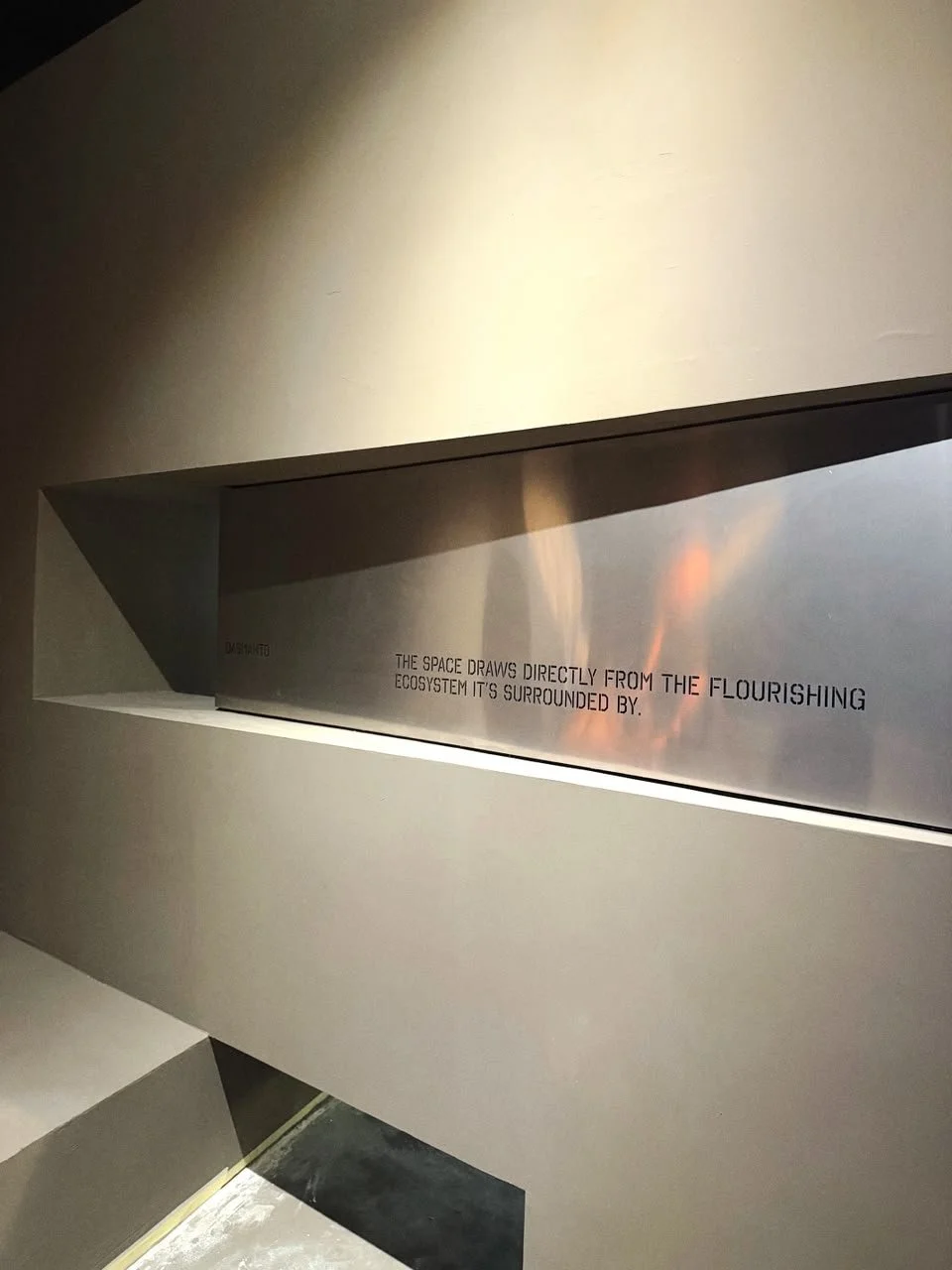
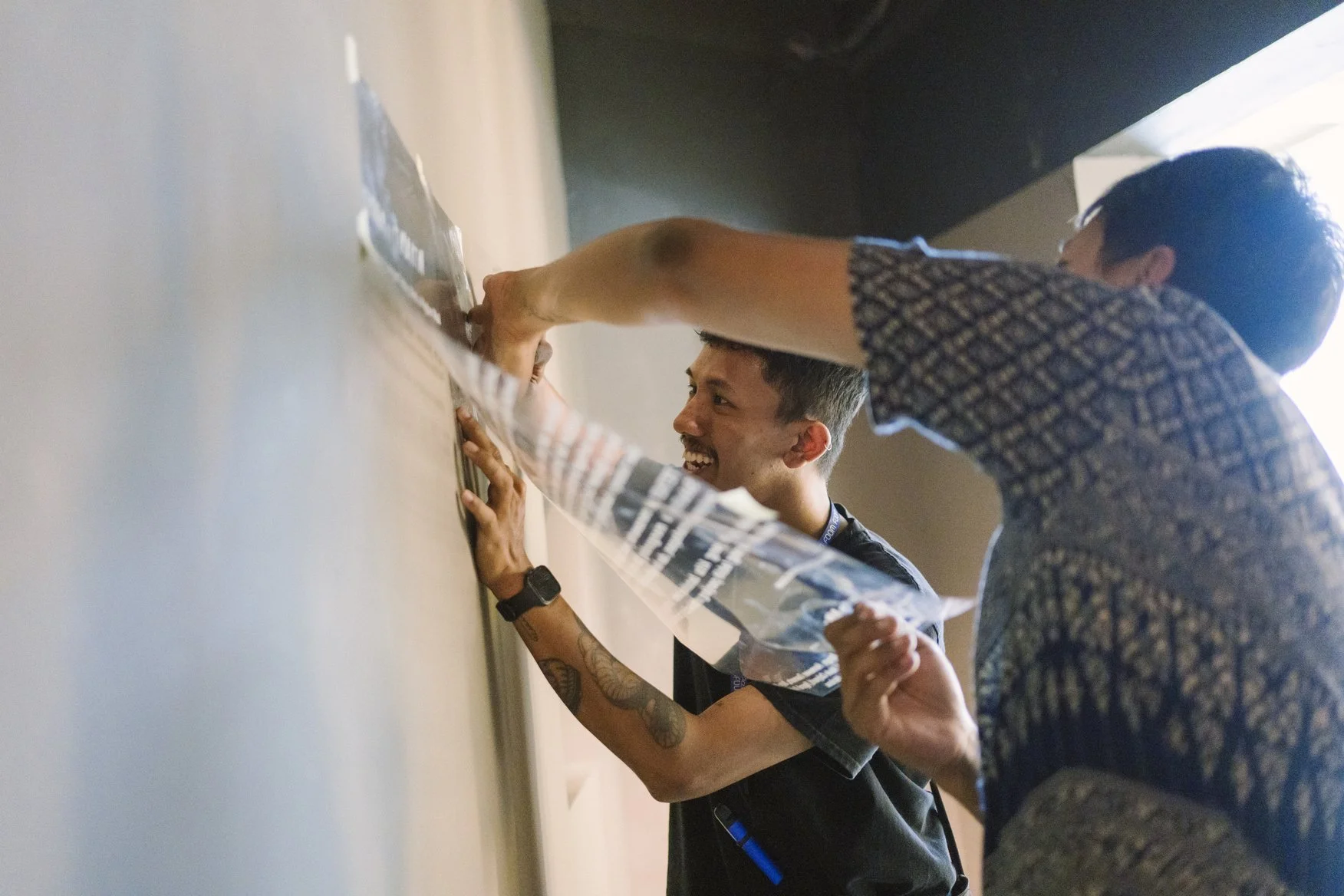
The exhibition architecture was developed in collaboration with Hermawan Dasmanto Studio. Rather than recreating the RAD building, the design invites visitors to discover the works at their own pace, allowing each person to shape their own path through the space.
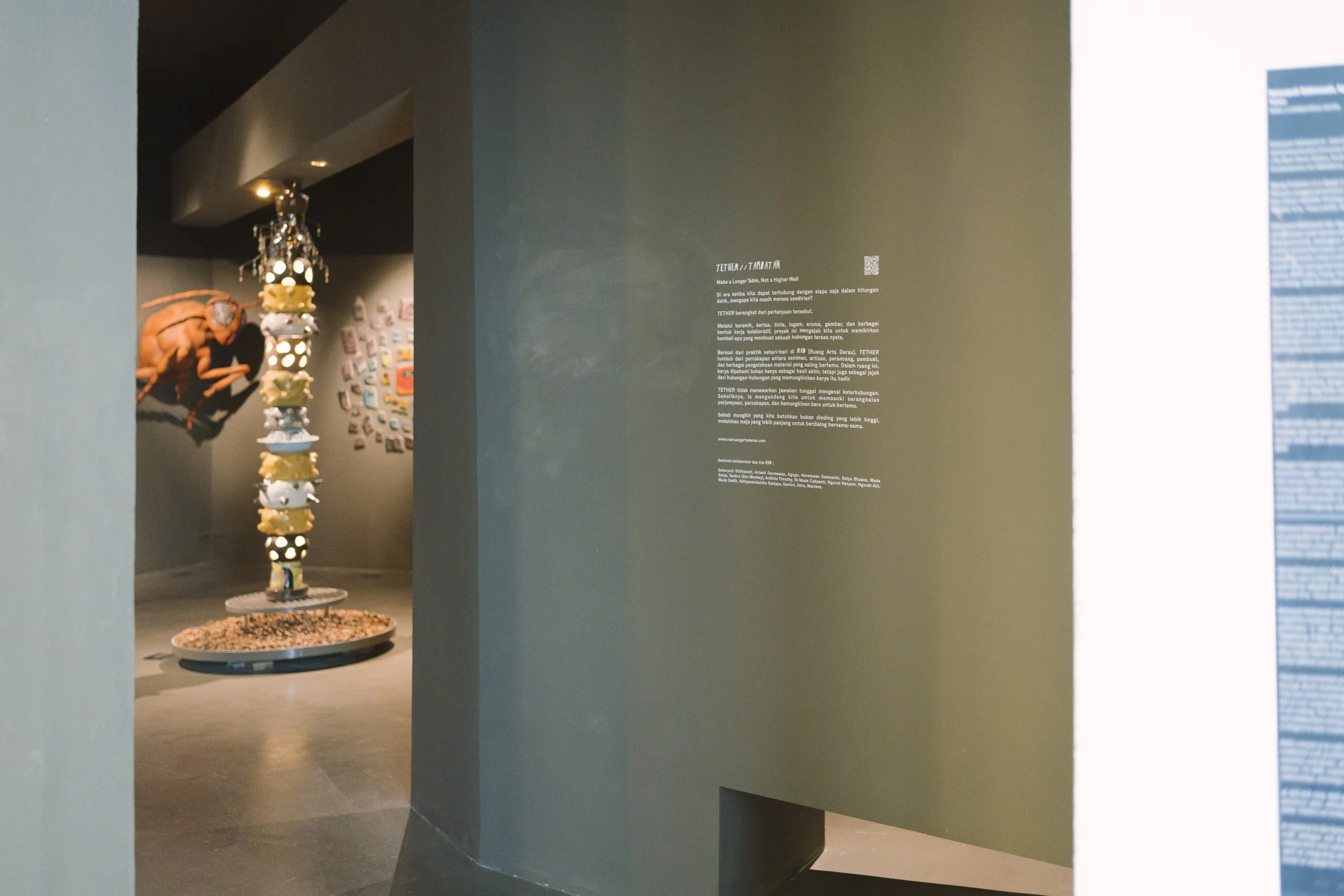
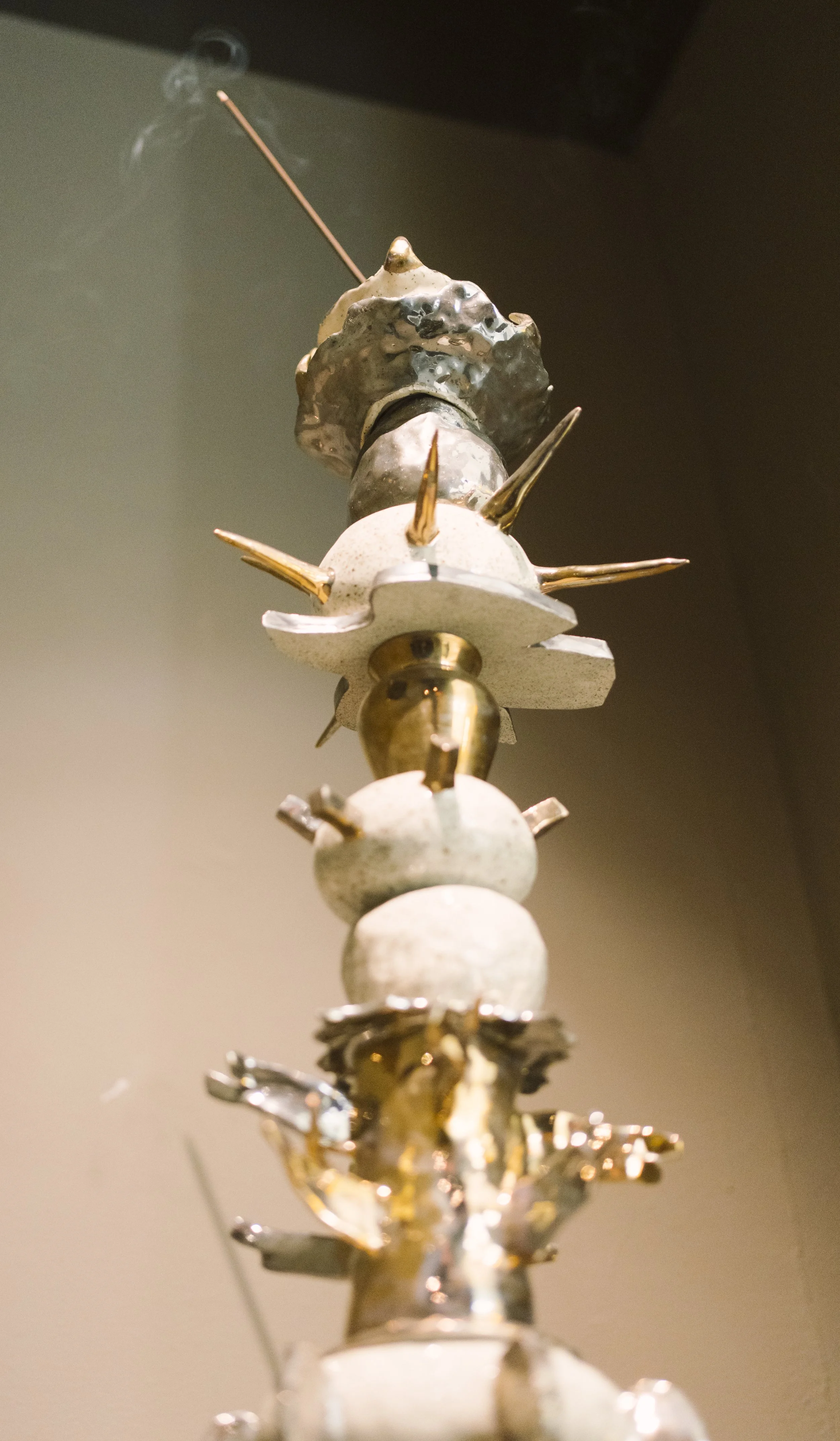
An asymmetrical corridor inspired by RAD's distinctive square openings welcomes visitors into the exhibition, offering glimpses of the everyday practice that defines the space. At the entrance stands a monochrome ceramic totem with gold and silver details, accompanied by handcrafted incense created by Tony Tandun (Zenmunkey). Two different fragrances will be burned throughout each day, allowing scent to become an evolving part of the exhibition experience.
Walls and partitions subtly guide visitors towards a more open central area, where the different works gradually reveal themselves within a shared spatial experience.
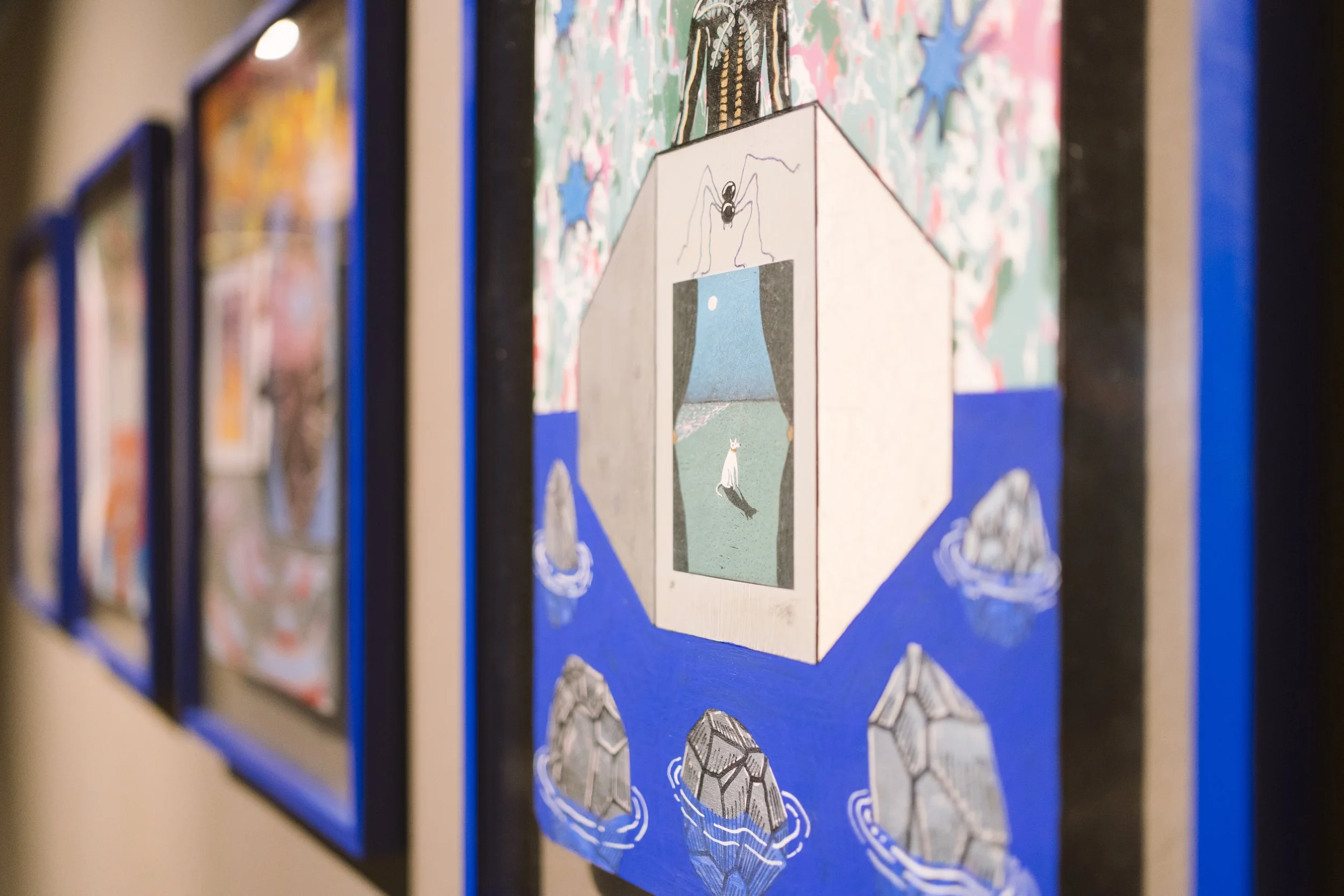
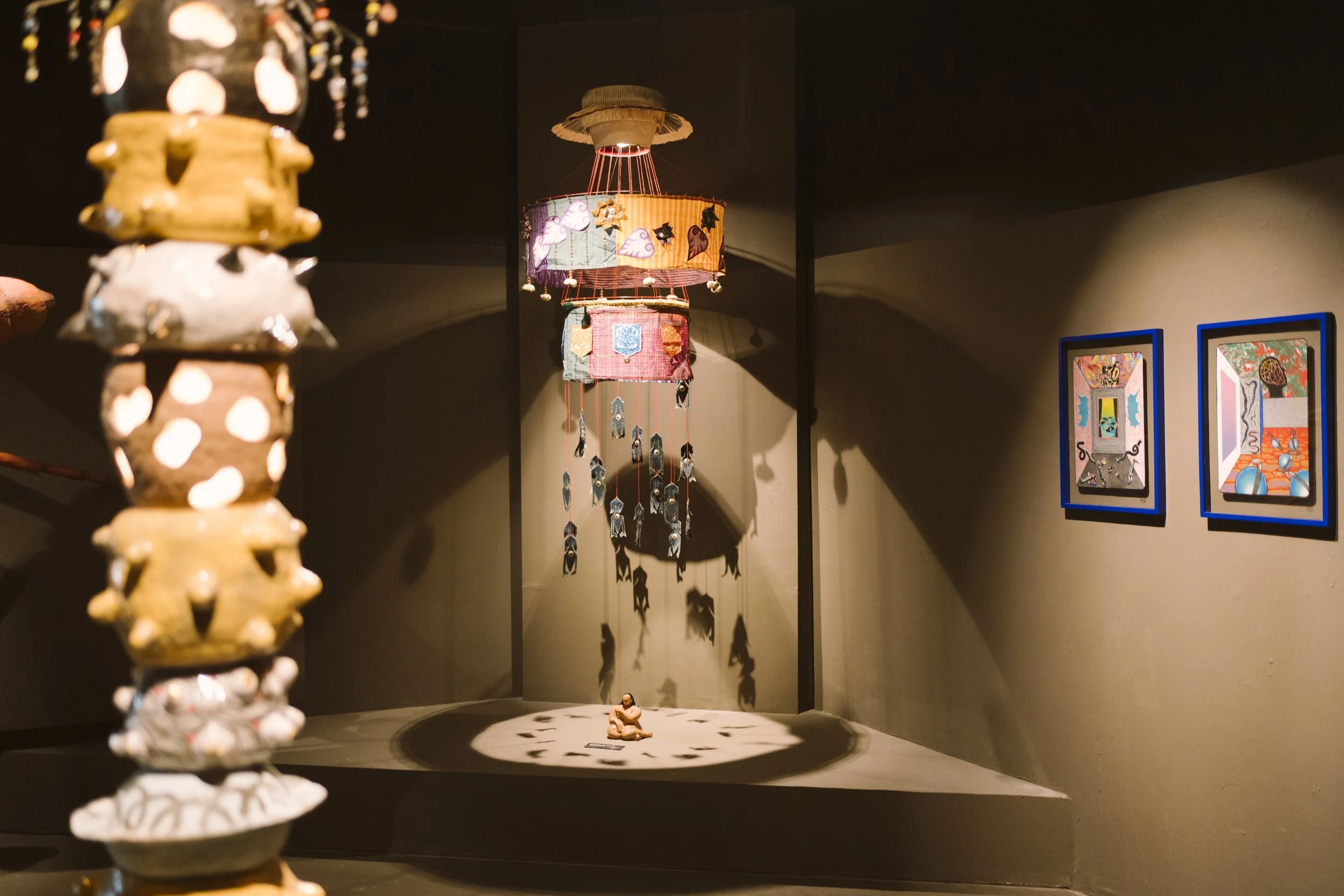
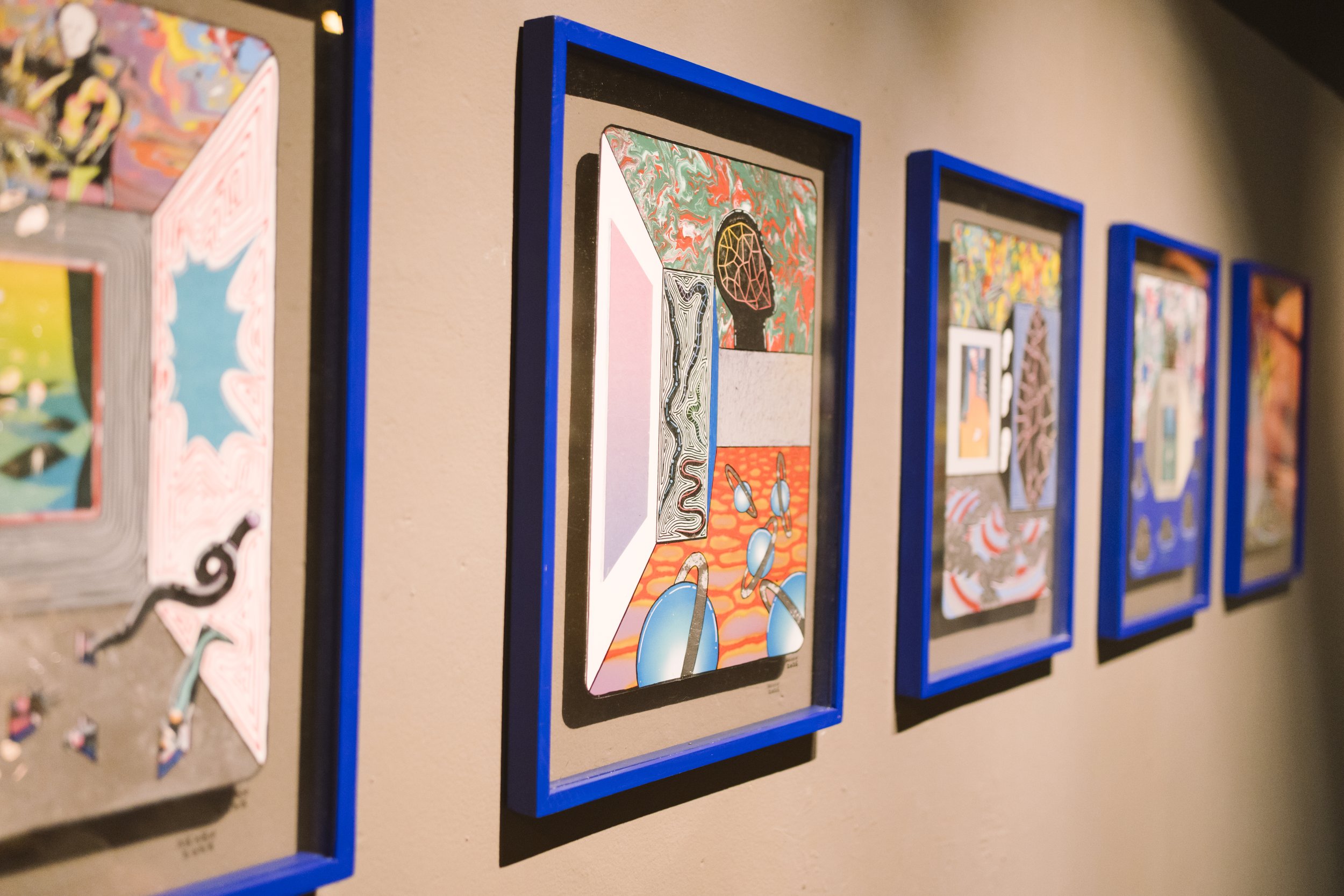
AGUGN presents five collage paintings combining paper, acrylic, ink, and silver leaf on plexiglass.
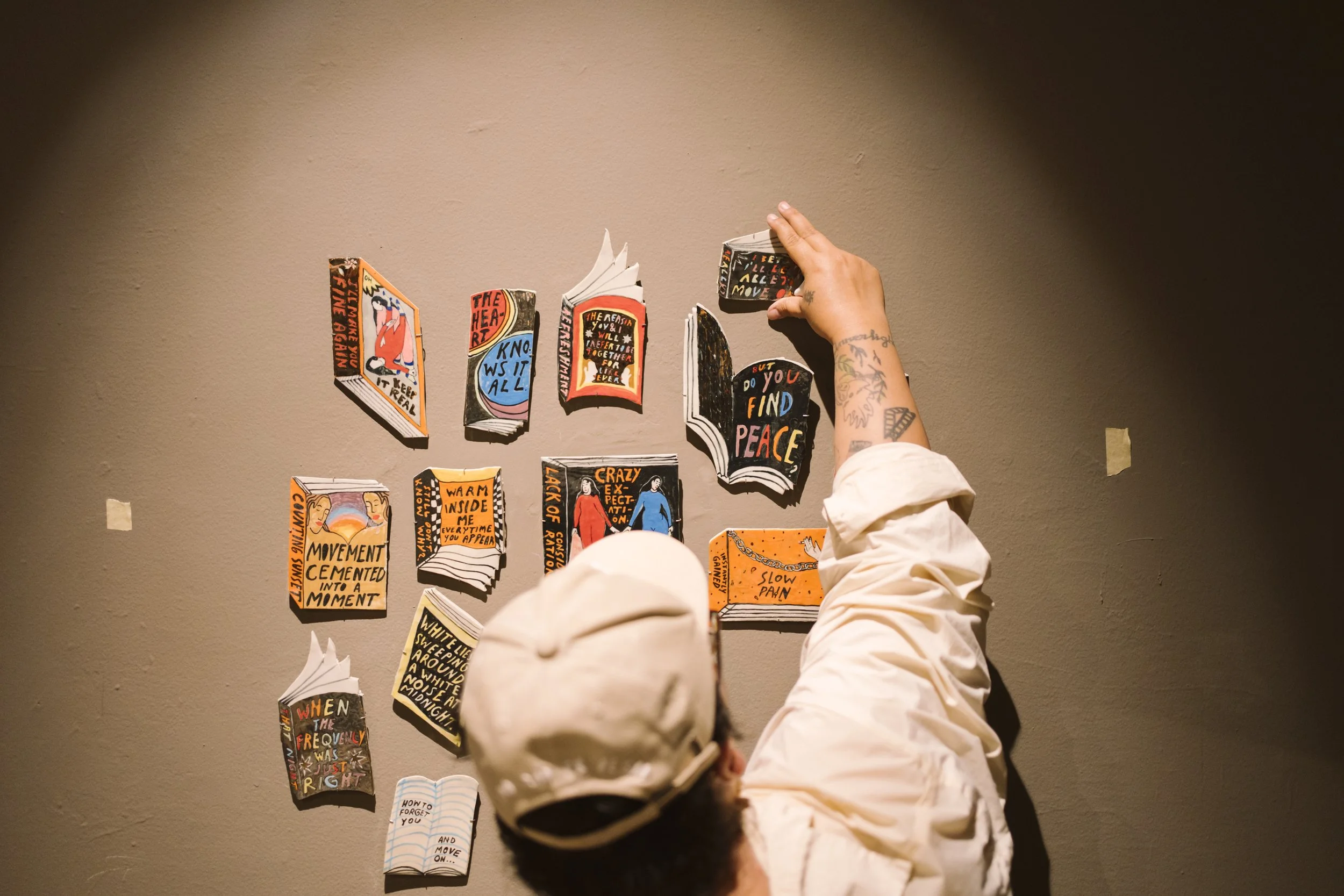
Sekarputi Sidhiawati presents two ceramic works created between 2024 and 2025. Drawing on the form and fragments of books as central elements of their narrative, both works will be exhibited in Indonesia for the first time.
Hermawan Dasmanto & DasManto Architecture contribute the exhibition's spatial intervention while also presenting works in stainless steel and digital photo frames featuring his photographic documentation of RAD. The stainless steel installation extends the architecture of the exhibition itself, echoing the square openings that have become a defining element of RAD.
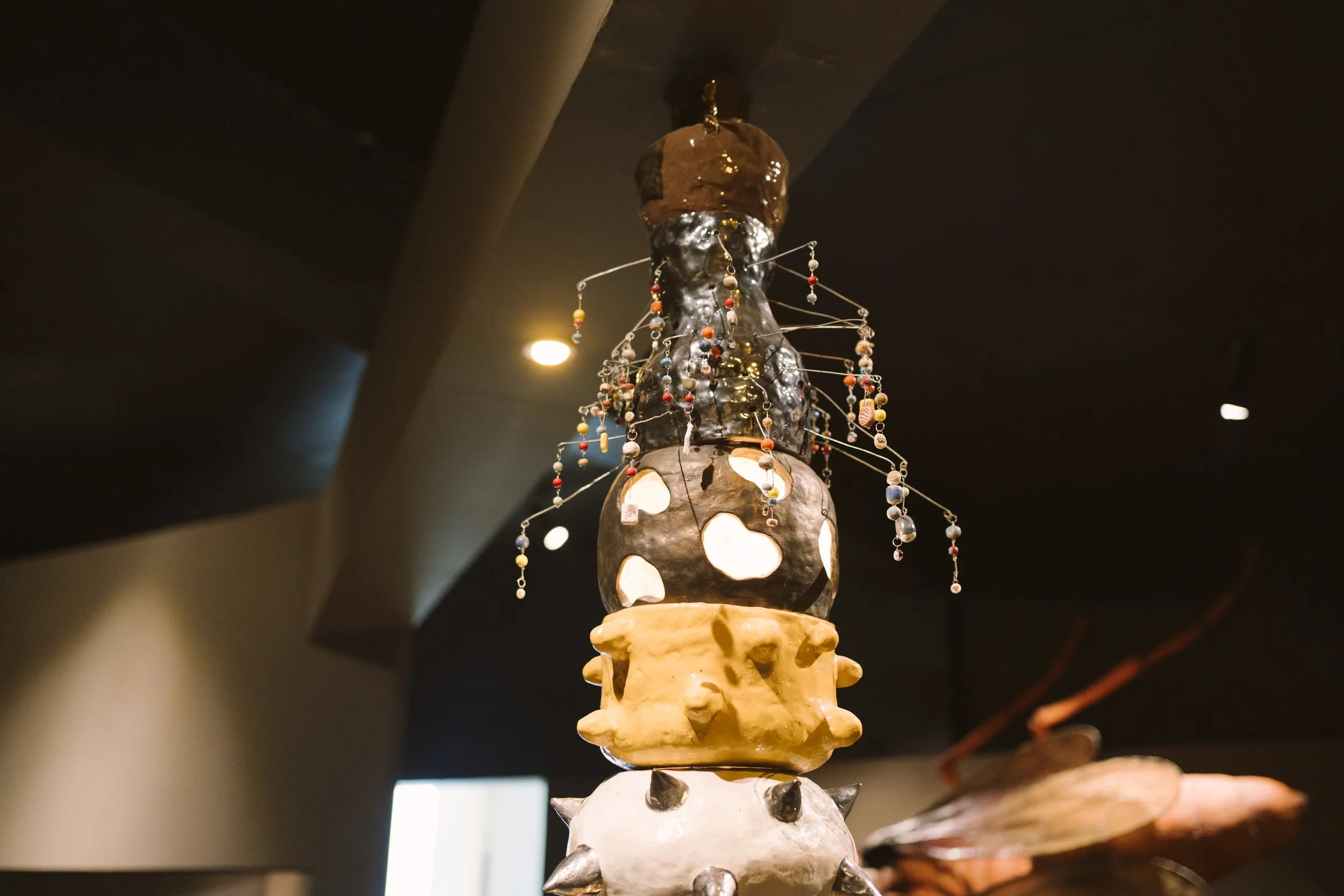
RPFF (AGUGN & Sekarputi Sidhiawati) x Zenmunkey presents a monochrome ceramic totem finished with gold and platinum details. The work is made from locally sourced stoneware clay from Pejaten, mixed with sand collected from Keramas Beach in Gianyar. After firing and glazing, selected details are finished with 8K gold and platinum.
The ceramic modules are stacked to form a vertical totem, with an opening at its peak designed to hold handcrafted incense by Zenmunkey. Throughout the exhibition, the incense will be lit several times each day, allowing scent to become an ever-changing layer of the installation. Over the course of the 73-day exhibition, approximately 365 incense sticks will be used, with 400 handcrafted sticks prepared by Zenmunkey for the duration of the exhibition.
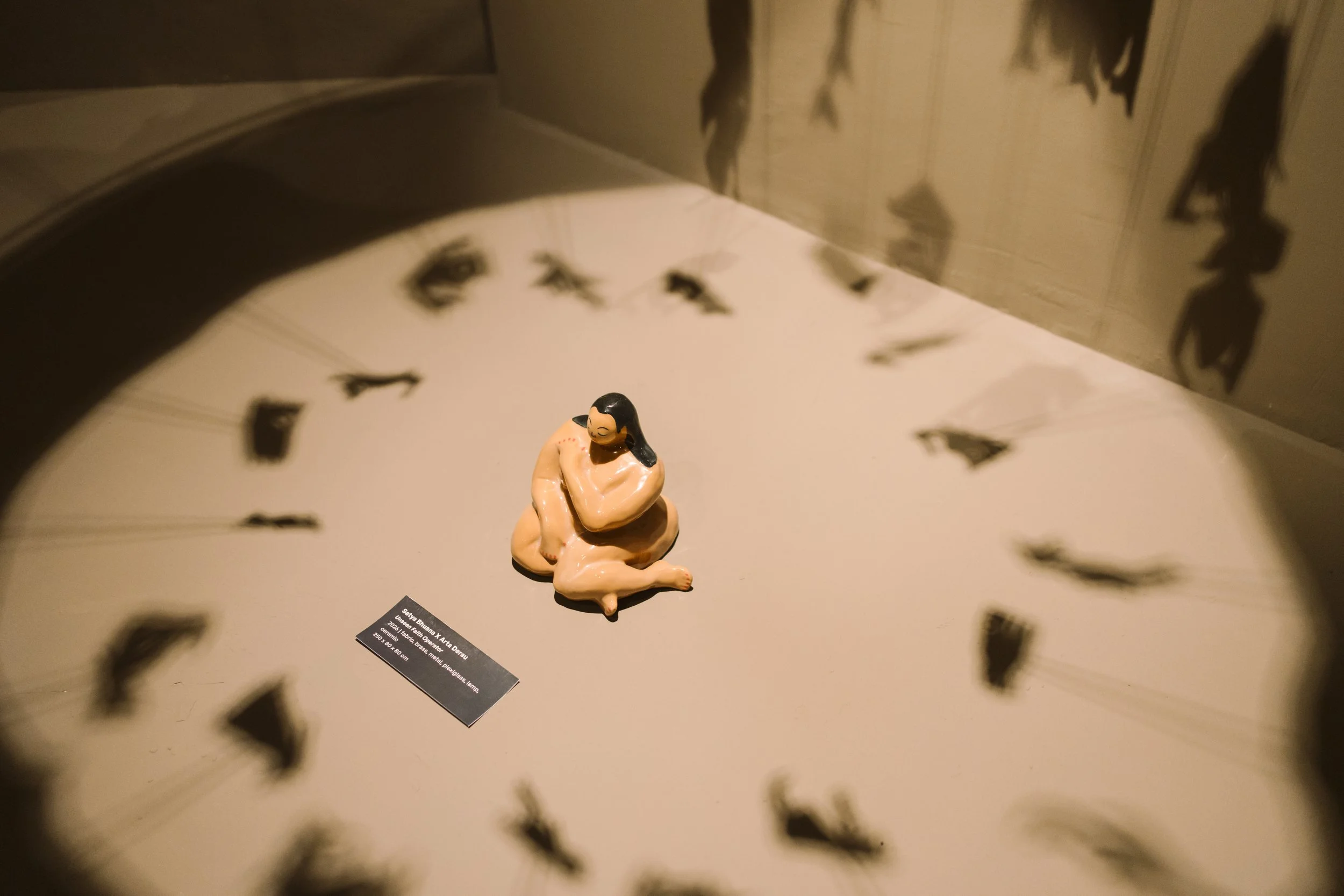
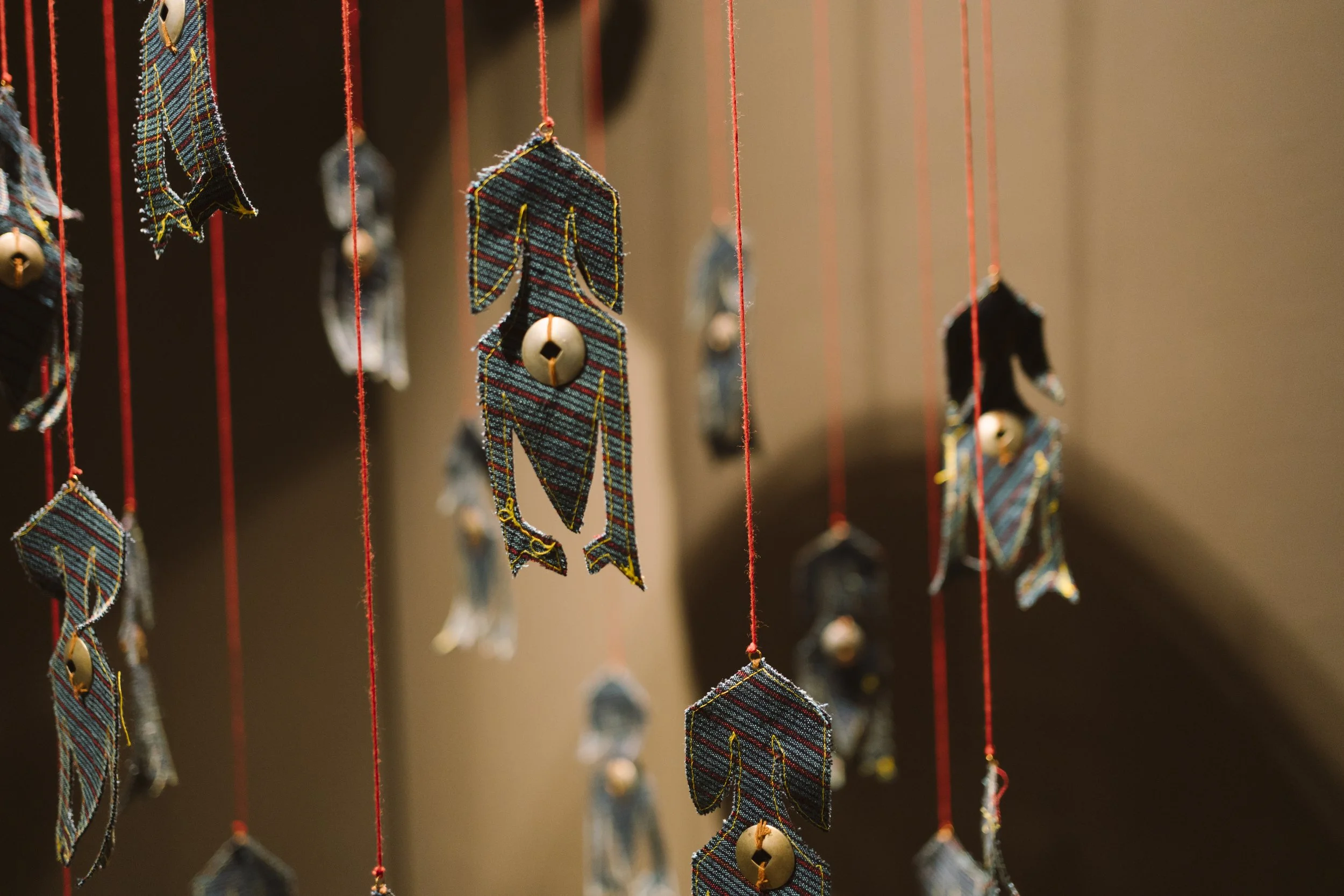
Satya Bhuana × Arta Derau present an installation rooted in Satya's experience of growing up and working in Tegallalang. His background in architecture and urban planning, together with a family deeply connected to Balinese artistic traditions, shapes the way he understands space, landscape, and social change.
A longtime collaborator and frequent conversation partner within RAD, Satya also contributed to RAD's 2024 research project on artistic practice in Tegallalang. His installation, Unseen Faith Operator, draws inspiration from the tip of the traditional penjor, reflecting on the ongoing transformation of Tegallalang Rice Terrace, one of northern Ubud's best-known cultural landscapes. Suspended approximately two metres above the ground, the work is completed by ceramic elements created by Arta Derau beneath it.
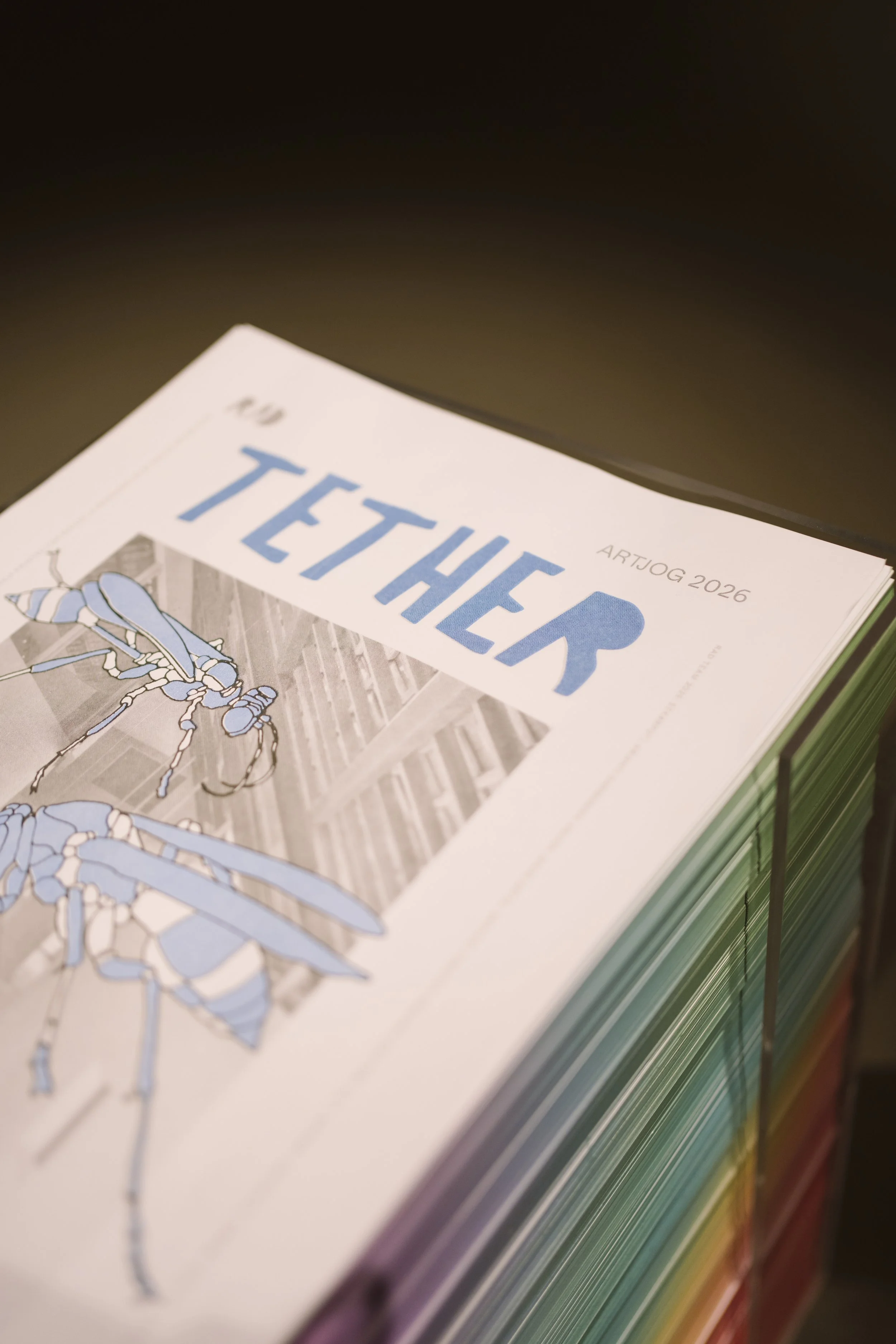
Riso Poster, RAD x Ardhito Timothy translates the exhibition's central proposition, Make a Longer Table, Not a Higher Wall, into a risograph poster edition. Ardhito Timothy, affectionately known as Moty, is part of the RAD team and operates the risograph press at RPFF. Printed in pink and black in an edition of approximately 5,000 copies, each poster features hand-painted rainbow gradients along its edges and is displayed in a transparent container. Visitors are invited to take a copy and contribute through the QR code provided. For us, the work imagines a modest but sustainable economic model—one built through participation, generosity, and trust.
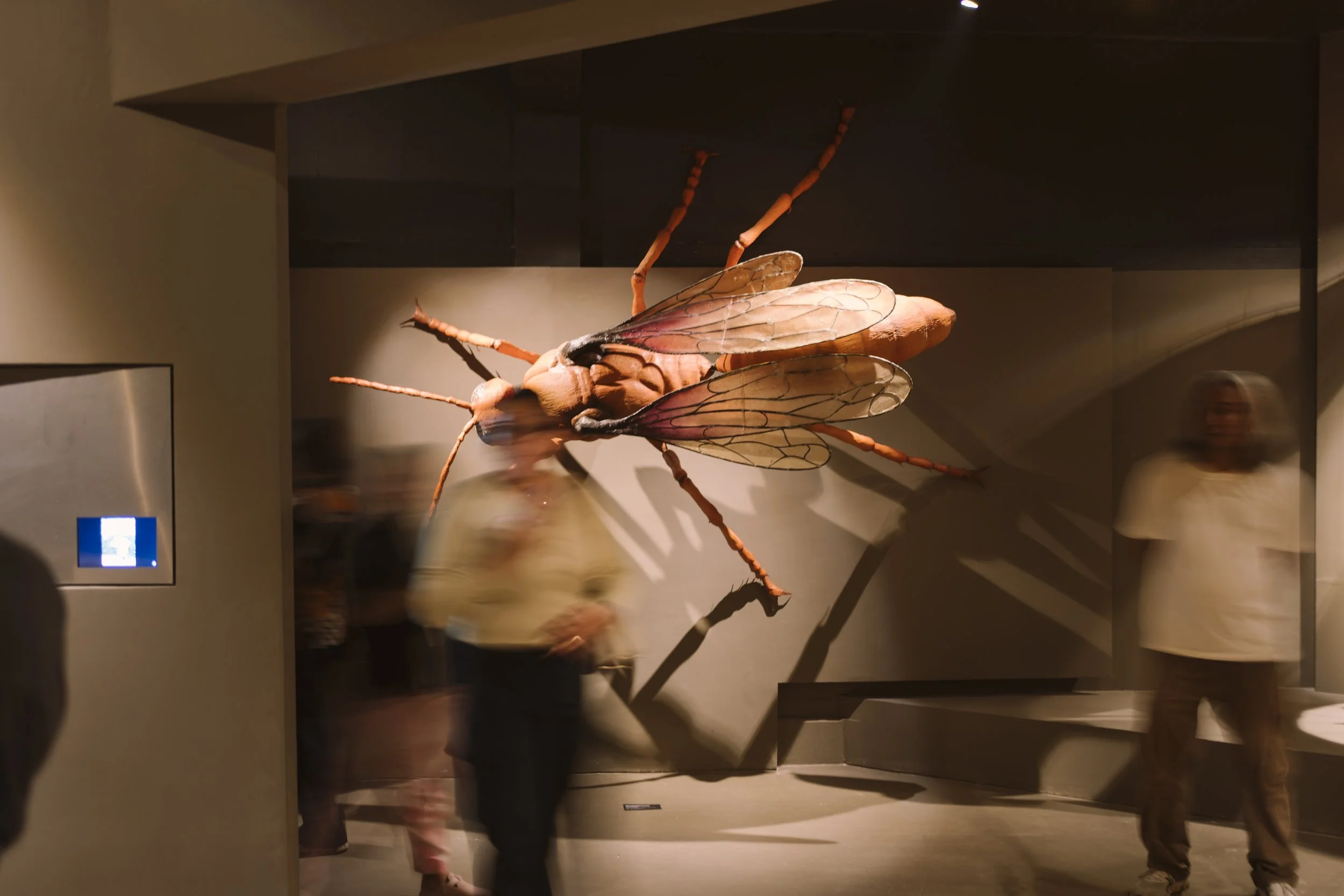
Ogoh-ogoh Wasps in Clay and Paper, RAD x Made Satya
Ogoh-ogoh are large sculptural figures traditionally paraded on the eve of Nyepi, Bali's Day of Silence, where they symbolically represent disruptive or negative forces.
Made Satya, who is also part of the RAD team, has long been involved in building ogoh-ogoh in his hometown of Tabanan. For this work, he chose the pottery wasp and paper wasp as symbols of the two materials most closely associated with RAD: clay and paper.
These wasps are also part of everyday life at RAD. Sometimes they quietly share the space with us; at other times, they remind us of their presence with an unexpected sting.
The collaborative process of building the ogoh-ogoh mirrors the communal spirit that defines both the tradition itself and RAD's way of working. It becomes an opportunity to make together, exchange skills, and allow ideas to emerge collectively.
Three wasps inhabit the exhibition space as though they have always belonged there—perched on walls, resting on the floor, or appearing ready to enter the gallery. Their presence reminds us that perhaps we, the building, and everything that happens within it are merely newcomers. The wasps have long been part of this landscape and of the web of life that existed before RAD was ever built.
We hope to continue sharing this space with them in a spirit of mutual respect. Just as RAD grows through conversation and collaboration, wasps build their nests through continuous collective labour. Together, they remind us that meaningful relationships flourish only when we are willing to share space, work alongside one another, and make room for others—including those whose presence we often overlook.
RPFF Grand Totem Standing 235 centimetres tall, this ceramic totem was originally conceived as a collaboration with a new media artist. As the project evolved, changing timelines and practical limitations led it in a different direction.
The work reflects on RAD itself—its values, its aspirations, and the collective trajectory it hopes to build in the years ahead. Instead of the LCD components originally envisioned, the final work uses light. Visitors are invited to peer into the openings within the structure, where light gradually emerges from inside. The installation is spatially integrated into Hermawan Dasmanto's architectural design and rests on steel grating layered with fragments of terracotta roof tiles commonly found throughout RAD.
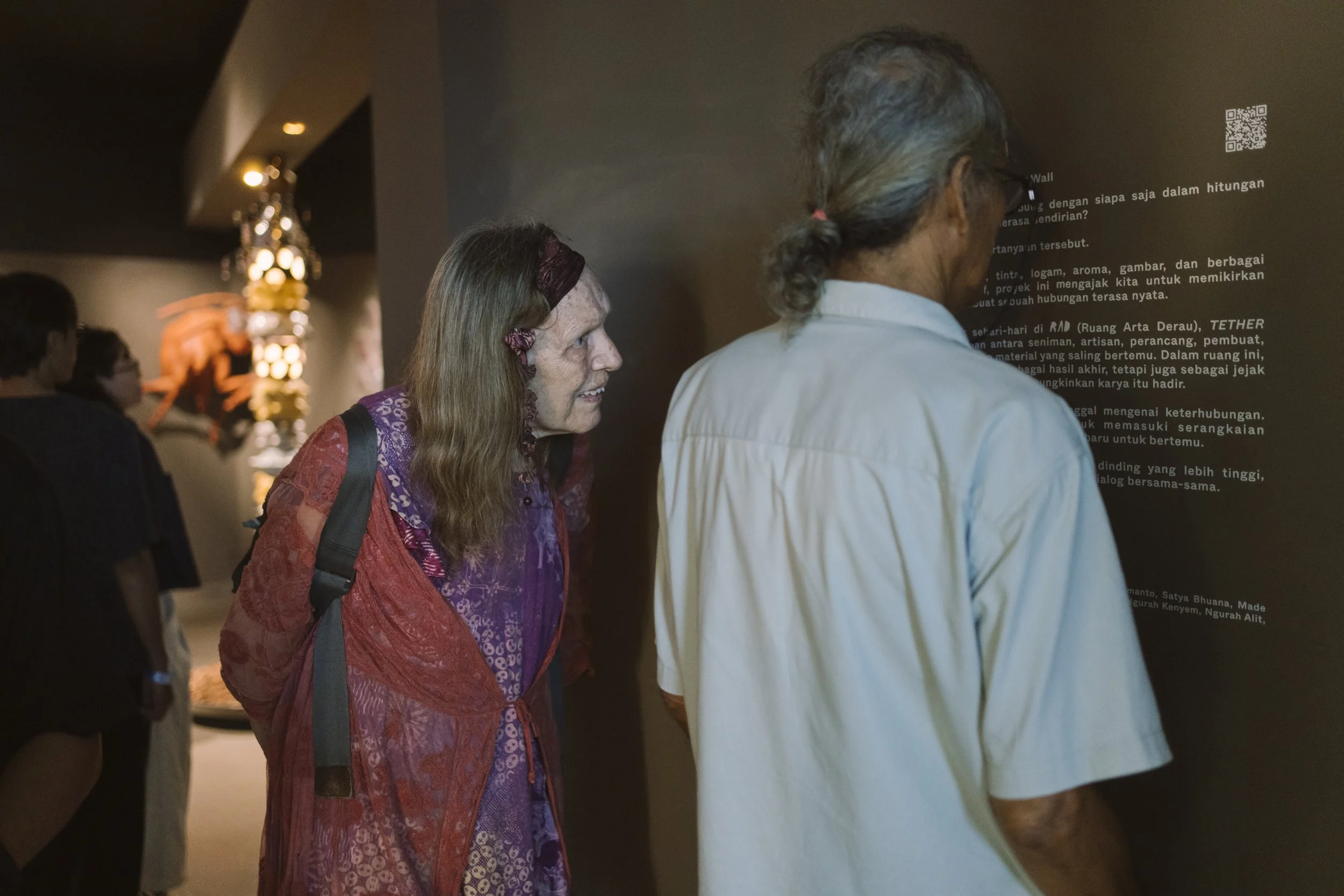
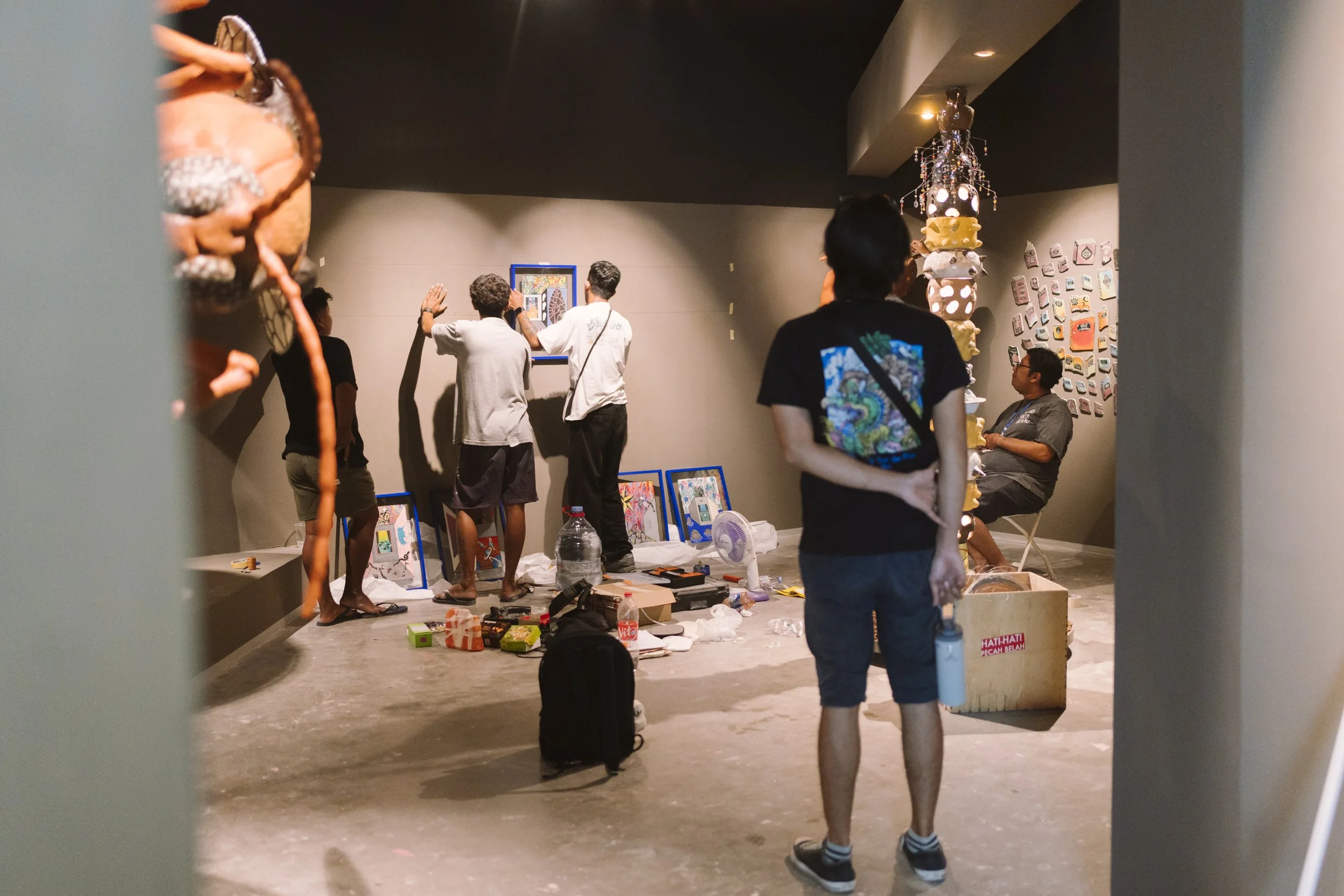
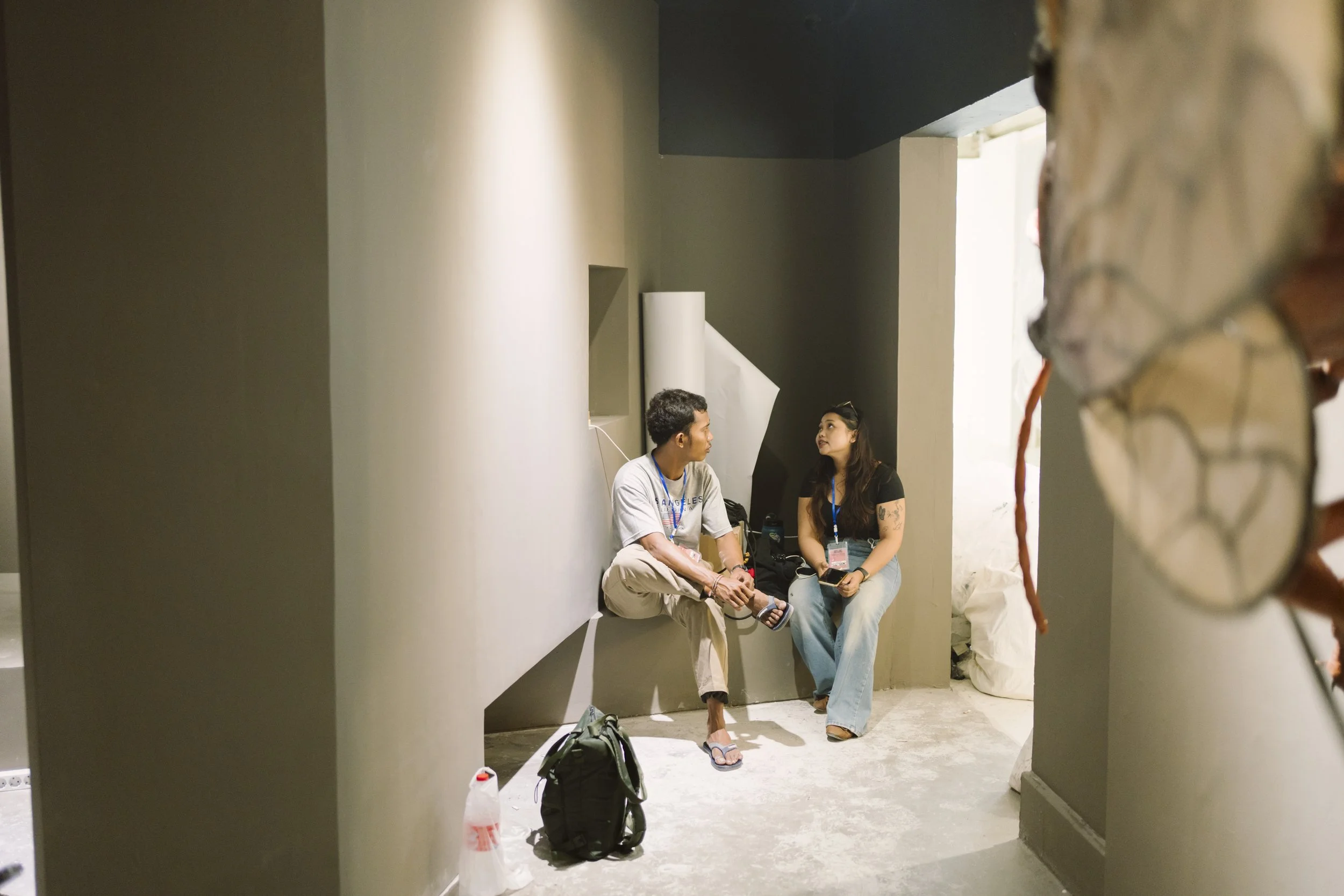
Through the works and collaborations gathered here, we invite visitors into the conversations, materials, and encounters that shape RAD's everyday practice.
At the same time, we recognise that not everything can—or should—be accepted without question. Some relationships ask us to look more closely at the values that sustain them, the responsibilities they carry, and the ways we choose to care for them.
We hope this exhibition becomes a table long enough to hold more stories, more experiences, more possibilities for meeting—and spacious enough to hold the questions that remain unanswered.
Cheers from RAD.
REFERENCES:
Brown, B. (2012). Daring Greatly: How the Courage to Be Vulnerable Transforms the Way We Live, Love, Parent, and Lead. New York: Gotham Books.
Gunawan, I. A. N., Suryani, & Shalahuddin, I. (2022). Dampak penggunaan media sosial terhadap gangguan psikososial pada remaja: A narrative review. Jurnal Kesehatan, 15(1), 78–92.
Office of the Surgeon General. (2023). Our epidemic of loneliness and isolation: The U.S. Surgeon General’s advisory on the healing effects of social connection and community. U.S. Department of Health and Human Services.
Sennett, R. 2012. Together: The Rituals, Pleasures and Politics of Cooperation. New Haven: Yale University Press.
Turkle, S. (2011). Alone Together: Why We Expect More from Technology and Less from Each Other. New York: Basic Books.